Brug for hjælp?
Kreatin er et stof, der naturligt produceres og optages af vores krop. Det produceres af leveren og nyrerne fra aminosyrer som arginin, glycin og methionin. Vi kan også dagligt optage kreatin fra fødevarer som kød og fisk. Kreatin er en vigtig energikilde for musklerne under intensive aktiviteter som styrketræning og sprint. Lagringen af kreatin, som primært findes i musklerne, gør, at du kan opretholde maksimal indsats i de første sekunder af en øvelse.
Alle, der ønsker at få mere ud af deres træning, kan gøre brug af kreatin. Det afhænger dog af den sport, du dyrker. Ved sportsgrene, hvor du udfører mange korte og intensive kraftanstrengelser, kan kreatin være meget nyttigt (styrketræning, korte sprinter). Men ved sportsgrene, hvor du udfører langvarige og lavintensive kraftanstrengelser, vil det ikke være effektivt. Desuden har personer, der følger en diæt uden kød og fisk, større resultater ved indtagelse af kreatin, da de næsten ikke får kreatin gennem kosten.
Det vigtigste forskel mellem creatine monohydrat og Creapure ligger i renheden og kvaliteten:
- Kreatinmonohydrat er den mest almindelige og billigste form for kreatin. Det er effektivt for de fleste mennesker, men kvaliteten kan variere afhængigt af mærket og produktionsmetoderne.
- Creapure er et varemærke for kreatinmonohydrat af højere kvalitet, produceret i Tyskland. Det er kendt for sin exceptionelle renhed og betragtes ofte som den bedste form for kreatinmonohydrat, da det næsten ikke indeholder urenheder.
Kort sagt er Creapure en premium version af kreatinmonohydrat med højere renhed og kvalitet.
Selvom kreatin generelt er sikkert, er der nogle kendte bivirkninger. Kreatin kan forårsage fordøjelsesproblemer, væskeretention og kramper. Disse bivirkninger forekommer dog sjældent og kan ofte undgås ved at drikke tilstrækkeligt med vand og ikke tage en for høj dosis. Hvis et af disse problemer opstår, kan du også prøve at tage en mindre dosis og eksperimentere med det.
Du skal også tage højde for, at du kan tage et par kilo på, fordi kreatin får musklerne til at holde mere væske. For folk, der dyrker bodybuilding, er dette en fordel, da dine muskler bliver lidt større. Dog skal folk, der dyrker boksning eller andre sportsgrene, hvor vægt er vigtig, tage højde for dette.
Der er stadig en sejlivet myte om, at kreatin skulle forårsage skaldethed. Dette er dog aldrig videnskabeligt bevist. Skaldethed skyldes primært genetisk disposition og hormoner, og ikke kreatin.
Hvad er kreatin?
Creatine er en naturlig forbindelse, der dannes i din krop for at forsyne dine muskler med energi. Det dannes af aminosyrer i leveren, bugspytkirtlen og nyrerne og er afgørende for muskelfunktionen. Når det først er dannet, transporteres det via blodbanen til musklerne, som opbevarer cirka 95% af det.
Kreatin hjælper dine muskler under intensive aktiviteter som vægtløftning eller sprint. Det gør dette ved at omdanne sig til noget, der kaldes fosfocreatin. Denne ændring hjælper dine muskler med at bruge energi mere effektivt, en slags genbrug, ved hjælp af et specielt enzym kaldet kreatinkinase.
Hvad gør kreatin?
Kreatin, fra kost eller kosttilskud, hjælper musklerne ved at øge mængden af fosfocreatin (PCr). Dette hjælper med produktionen af mere ATP, som fungerer som energi for dine muskler. PCr leverer fosfat til at lave ekstra ATP, hvilket giver dine muskler energi under hård belastning. Dette system af ATP, kreatin og fosfocreatin er meget vigtigt for aktiviteter som vægtløftning og sprint. Kreatin øger ATP-niveauet, hvilket gør dine muskler mere effektive, hvilket gør det til et meget nyttigt kosttilskud til fitness.
Hvornår skal jeg tage kreatin?
At tage kreatin før eller efter din træning, uanset om det er et par timer før eller lige før, giver lignende effekter på dine muskler. Dette gælder både unge og ældre voksne. Det betyder derfor ikke rigtig noget, hvornår du tager det – vælg blot det tidspunkt, der fungerer bedst for dig. Det er også nyttigt at tage kreatin på hviledage, især hvis du har trænet intensivt i en uge. Sørg for at tage det med kulhydrater, da det så bedre kommer ind i dine muskelceller og virker mere effektivt.
Hvordan bruger jeg kreatin?
Creatin monohydrat, den mest undersøgte og effektive form, fås normalt i pulverform. Den anbefalede daglige indtagelse varierer: i den første uge anbefales det at indtage 5 gram 3 gange om dagen, efterfulgt af 5 gram 2 gange om dagen til vedligeholdelse. Efter to uger anbefales en daglig indtagelse på 5 gram. Creatin optages bedst i kombination med kulhydrater, derfor anbefales det at tage det sammen med måltider, der indeholder kulhydrater. For optimale resultater er det tilrådeligt at tage creatin lige før eller efter træning, så det hurtigt kan transporteres til musklerne. Denne tilgang maksimerer effektiviteten af creatin som et supplement til muskelopbygning og præstationsforbedring under træning.
Hvordan forbedrer kreatin muskelpræstationerne?
Kreatinphosphat afgiver sin energi til ADP, som producerer mere ATP. ATP fungerer som brændstof for dine muskler og hjælper dem med at trække sig sammen og udføre deres arbejde. Dette forbedrer dine træninger og hjælper dine muskler med at komme sig hurtigere. Forskere har studeret dette og bekræftet, at det virkelig virker!
Er kreatin sikkert?
Ja, kreatin er en naturlig aminosyre, der findes i den menneskelige krop. Forskning har vist, at det ikke har negative bivirkninger ved den anbefalede mængde kosttilskud og ved brug i henhold til anvisningerne på etiketten af sunde voksne.
Er kreatin også egnet til kvinder?
Selvom kreatin traditionelt er forbundet med mandlige atleter, kan kvinder også have stor gavn af at inkludere det i deres daglige rutine. Forskning viser nemlig, at kreatin i kombination med motion er godt for restitution og præstation.
Hvorfor købe kreatin hos 17 Nutrition?
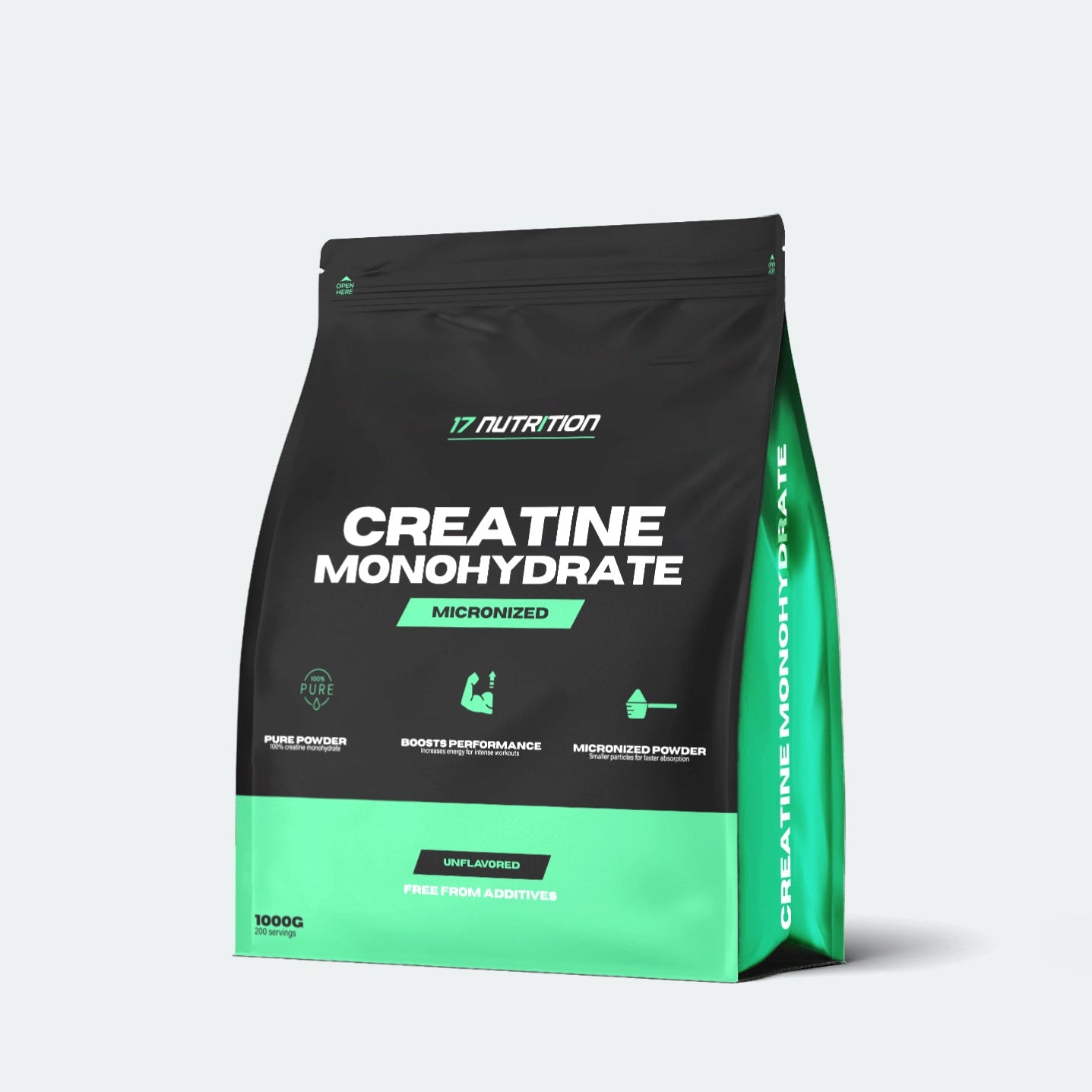
Frigør dit fulde potentiale med kreatin fra 17 Nutrition! Drag fordel af vores højkvalitets kreatintilskud, understøttet af videnskab og kvalitet. Opnå dine fitnessmål hurtigere og mere effektivt med vores pålidelige produkter. Vælg 17 Nutrition i dag og tag det første skridt mod optimal præstation og muskelvækst.